
Introduction: Why Algeria is Investing in Local Vehicle Assembly
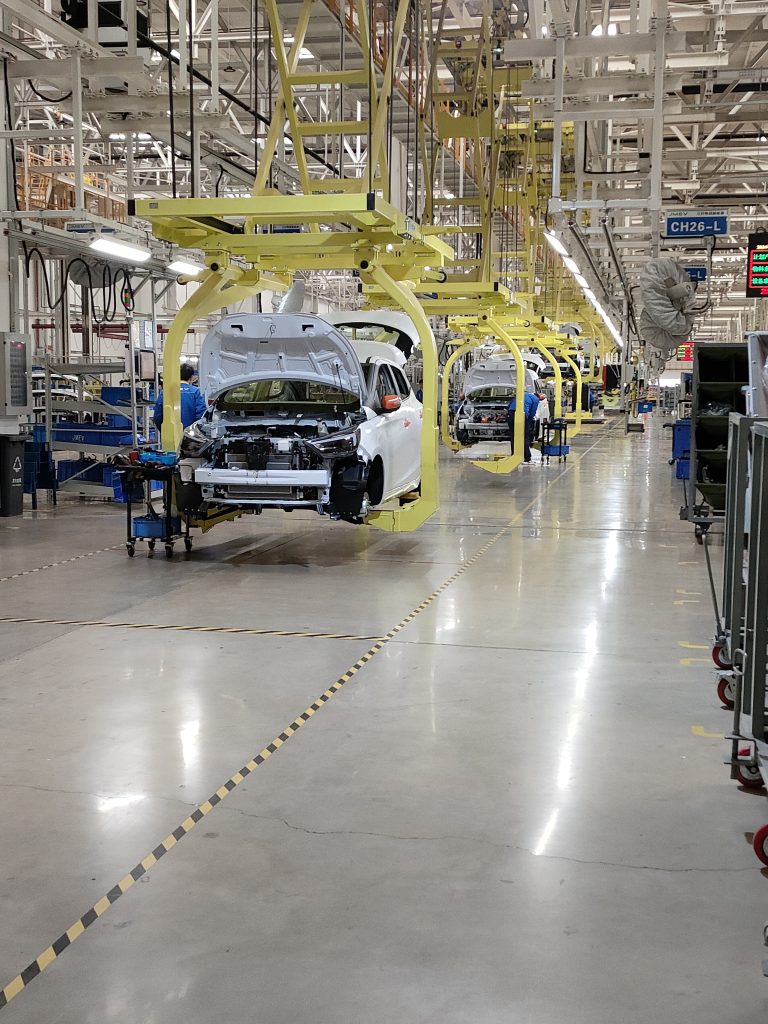
Algeria’s automotive sector is undergoing a strategic transformation. With government policies increasingly favoring local manufacturing over complete vehicle imports, establishing a CKD (Completely Knocked Down) assembly plant has become a compelling opportunity for Algerian industrial investors and government-backed manufacturing initiatives.
China, as the world’s largest automotive equipment exporter, offers mature turnkey solutions that combine competitive pricing with proven technology transfer. For Algerian buyers, importing a car CKD assembly line from China represents not just equipment procurement—it is a long-term industrial partnership.
This guide provides a comprehensive roadmap for Algerian manufacturers navigating the import process, from initial supplier identification to commissioning a fully operational assembly plant.
What is CKD vs SKD? Choosing the Right Assembly Model
Understanding the distinction between CKD and SKD (Semi-Knocked Down) is critical before initiating procurement.
| Feature | CKD (Completely Knocked Down) | SKD (Semi-Knocked Down) |
|---|---|---|
| Component State | All parts shipped separately: engines, transmissions, body panels, wiring harnesses | Pre-assembled modules: engine with gearbox attached, pre-wired dashboard units |
| Local Value Added | 40-60% | 20-35% |
| Required Infrastructure | Full welding, painting, assembly, and testing lines | Primarily final assembly and testing |
| Investment Level | Higher initial CAPEX | Lower initial CAPEX |
| Workforce Skill Required | Comprehensive technical training | Moderate assembly training |
| Best For | Long-term industrial base building, government localization mandates | Faster market entry, lower volume operations |
For Algeria: CKD assembly aligns with the government’s industrial diversification goals and provides maximum local employment impact. Most serious Algerian automotive projects target CKD capability to satisfy local content requirements.
Why Import Car CKD Assembly Lines from China?
1. Integrated Supply Chain Maturity
China’s automotive equipment ecosystem spans from precision welding robots to environmental-compliant painting systems. Buyers source entire production ecosystems rather than discrete machines.
2. Proven Technology Transfer Models
Chinese suppliers have delivered turnkey CKD plants across Southeast Asia, the Middle East, Africa, and Latin America. These track records demonstrate capability in training local workforces and adapting to local operational conditions.
3. Cost-Performance Advantage
Chinese automotive production lines typically offer 30-50% cost savings compared to European or Japanese equivalents, while meeting ISO/CE quality benchmarks. For budget-conscious Algerian projects, this differential enables faster ROI.
4. Flexible Configuration
Whether your Algerian facility targets 15 JPH (jobs per hour) for niche markets or 60 JPH for mass production, Chinese suppliers provide scalable, modular line designs.
The 7-Step Import Process for Algerian Buyers
Step 1: Define Your Technical Requirements
Before contacting suppliers, document:
- Target vehicle categories: Passenger cars, SUVs, light commercial vehicles, or mixed platform?
- Annual capacity target: 5,000 units? 30,000? 100,000?
- JPH requirement: 15 JPH (low volume), 30 JPH (medium), 45-60 JPH (high volume)
- Process scope: Welding shop + Painting shop + Final Assembly + Testing line, or SKD assembly only?
- Local content goals: What percentage of components will eventually be sourced locally?
Step 2: Supplier Identification & Pre-Qualification
Focus on Chinese suppliers with:
- Export track record: Minimum 5 years of international project delivery
- Algeria/MENA experience: Prior installations in North Africa or similar climate zones
- Full-scope capability: Welding, painting, final assembly, and testing—not just partial solutions
- After-sales infrastructure: Spare parts commitment, remote diagnostic capability, on-site training programs
Supplier Evaluation Scorecard (10-Point Checklist):
| Criteria | Weight | Score (1-5) |
|---|---|---|
| Years in automotive equipment manufacturing | 15% | |
| Number of CKD turnkey projects delivered | 20% | |
| Reference projects in Africa/MENA | 15% | |
| In-house R&D and customization capability | 10% | |
| Quality certifications (ISO 9001, CE marking) | 10% | |
| Painting system environmental compliance | 10% | |
| Training program comprehensiveness | 10% | |
| Spare parts availability guarantee (years) | 5% | |
| Warranty terms on core equipment | 3% | |
| Financial stability/bank references | 2% |
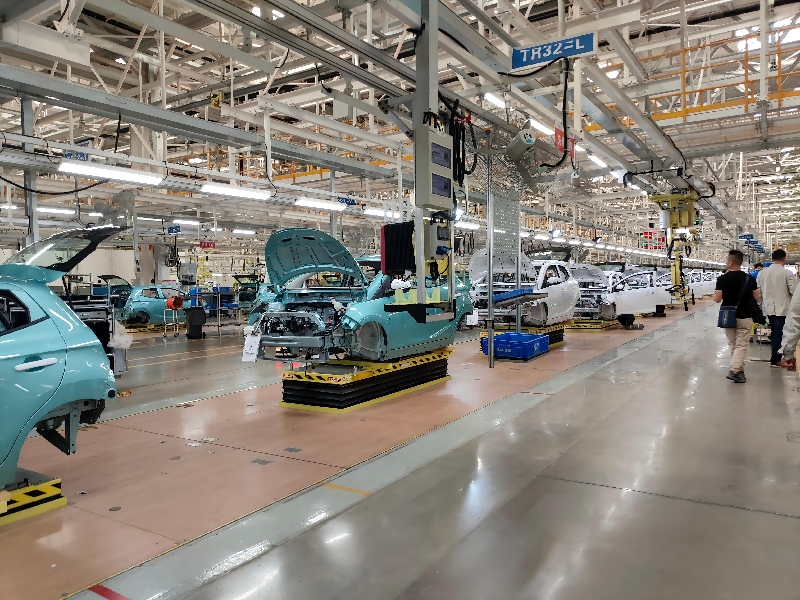
Step 3: Technical Consultation & Process Design
Reputable suppliers conduct virtual or on-site process audits. Expect:
- Factory layout optimization based on your Algerian facility dimensions
- Process flow simulation using digital twin technology
- Energy consumption calculations (critical for Algerian operational cost planning)
- Environmental compliance roadmap (waste treatment, VOC management for painting operations)
Step 4: Factory Audit & Due Diligence
If feasible, visit the supplier’s manufacturing base in China. Key inspection points:
- Robot welding cell precision (test with sample body panels)
- Painting booth airflow and filtration efficiency
- Conveyor system load testing
- Electrical control cabinet build quality
- Quality documentation traceability
Red Flags to Avoid:
- Suppliers refusing factory visits or providing only video tours
- Quotes 40%+ below market average (indicates specification shortcuts)
- No referenceable customers in automotive sector
- Vague warranty language on core equipment like robots and painting systems
- Pressure for 100% advance payment
Step 5: Contract Negotiation & Commercial Terms
Standard CKD line contracts should specify:
- Scope of supply: Detailed Bill of Materials with brand specifications (e.g., welding robot brand: KUKA/ABB/Fanuc; painting system: Dürr or equivalent)
- Performance guarantees: JPH achievement, first-pass yield rate (typically ≥97%), paint quality standards
- Delivery timeline: Equipment manufacturing (4-6 months), shipping (30-45 days to Algerian port), installation & commissioning (3-5 months)
- Payment structure: 30% advance, 30% pre-shipment inspection, 30% post-installation acceptance, 10% retention after 12-month operation
- Training commitment: Minimum 4-8 weeks on-site training for Algerian engineers and technicians
- Spare parts package: 2-year critical spare parts inventory included
Step 6: Shipping, Customs & Logistics
Port Considerations for Algeria:
- Primary destination ports: Algiers (Port of Algiers), Oran, Annaba
- Shipping mode: FCL (Full Container Load) for modular equipment, break-bulk for oversized painting booth structures
- HS Code reference: Automotive production line equipment typically falls under Chapter 84 (Machinery) or Chapter 85 (Electrical equipment), with specific codes varying by component type
- Documentation required: Commercial invoice, packing list, bill of lading, certificate of origin, ISO/CE conformity certificates
- Algerian customs: Anticipate thorough inspection; ensure Arabic/French translation of technical documentation
Logistics Tip: Coordinate with freight forwarders experienced in heavy industrial equipment to Algerian ports. Painting line ovens and conveyor systems often require special handling.
Step 7: Installation, Commissioning & Handover
The critical phase where supplier expertise directly impacts timeline:
- Chinese installation team should remain on-site until stable production is achieved
- Acceptance criteria: 3 consecutive days at target JPH with quality compliance
- Local workforce training: Comprehensive handover manuals in French/Arabic; operator certification programs
- Performance warranty period: Typically 12-24 months post-acceptance
Technical Specifications Checklist for Algerian CKD Plants
Welding Shop (Body-in-White)
| Specification | Standard Configuration | Notes for Algeria |
|---|---|---|
| Welding robots | 6-axis articulated robots (KUKA, ABB, or Fanuc) | Ensure tropical climate-rated controllers |
| JPH capacity | 15-60 JPH depending on vehicle complexity | Match to market demand projections |
| Fixture systems | Quick-change modular fixtures | Essential if multi-model production planned |
| Quality check | Online laser measurement + manual audit stations | |
| Power requirement | 380V/50Hz standard | Verify Algerian grid stability; consider backup power |
Painting Shop
| Specification | Standard Configuration | Notes for Algeria |
|---|---|---|
| Pretreatment | Zinc-phosphate or eco-friendly alternative | Water treatment system critical for compliance |
| Electrocoating (ED) | Full immersion ED tank | Corrosion resistance priority for coastal Algerian climate |
| Spray booths | Dürr or equivalent robotic painting | VOC emission control must meet evolving Algerian EPA standards |
| Drying ovens | Gas-fired or electric | Energy source optimization based on local utility costs |
| Paint finish quality | Class A surface finish | Essential for consumer vehicle market acceptance |
Final Assembly Line
| Specification | Standard Configuration | Notes for Algeria |
|---|---|---|
| Conveyor type | Slat conveyor or friction-driven skid | Skid systems offer better flexibility |
| Assembly stations | 15-25 stations depending on JPH | Ergonomic design for operator efficiency |
| Torque control | Digital torque monitoring on critical fasteners | Quality traceability requirement |
| Fluid filling | Automated coolant, brake fluid, fuel filling | Safety compliance for flammable fluids |
Testing & Quality Line
| Specification | Standard Configuration | Notes for Algeria |
|---|---|---|
| Wheel alignment | 3D alignment system | Mandatory for vehicle homologation |
| Brake test | Roller brake tester | Safety-critical |
| Headlight adjustment | Automated beam setter | Regulatory requirement |
| Road test | Chassis dynamometer + short test track | Final validation before delivery |
| Diagnostic scan | OBD-II compatible scan tools | Required for modern vehicle electronics |
Compliance & Documentation for Algerian Import
Chinese Export Requirements
- CCC certification (if applicable to specific equipment categories)
- CE marking for machinery safety compliance
- ISO 9001:2015 quality management certification
- ISO 14001 environmental management (for painting systems)
Algerian Import Requirements
- Ministère de l’Industrie et des Mines approval for industrial equipment import
- CNAS (Conseil National des Activités de la Sûreté) safety compliance for production facilities
- Customs registration: Ensure importer of record has valid Algerian business registration
- Technical documentation: French or Arabic translations mandatory for customs clearance and operator training
- Environmental permits: Painting operations require air emission permits from Algerian environmental authorities
Pro Tip: Engage a local Algerian industrial consultant or freight forwarder with automotive sector experience to navigate regulatory requirements efficiently.
Investment Budget Framework
Whiel exact figures vary by capacity and specification, Algerian buyers should anticipate:
| Cost Category | % of Total | Notes |
|---|---|---|
| Equipment (FOB China) | 55-65% | Welding, painting, assembly, testing lines |
| Ocean freight + insurance | 8-12% | China to Algerian port |
| Algerian customs duties + VAT | 10-15% | Varies by HS code classification; industrial equipment may qualify for incentives |
| Installation & commissioning | 12-18% | Includes Chinese team travel, lodging, local labor support |
| Training & documentation | 3-5% | Operator and maintenance training programs |
| Spare parts (initial stock) | 3-5% | 2-year critical spares recommended |
Total indicative range: A 30 JPH passenger car CKD line typically represents an investment of $8-15 million USD, depending on automation level and painting system sophistication.
Financing Consideration: Chinese suppliers increasingly support buyer financing through Sinosure (China Export & Credit Insurance Corporation) or structured payment terms. Algerian buyers should explore whether their project qualifies for Chinese government-backed export credit.
Risk Mitigation: Verifying Chinese Suppliers
Due Diligence Protocol
- Business license verification: Check Unified Social Credit Code via Chinese National Enterprise Credit Information Publicity System
- Factory audit: Physical inspection preferred; third-party verification (SGS, Bureau Veritas) acceptable alternative
- Reference checks: Contact 2-3 previous international customers directly
- Bank reference: Request supplier’s bank to confirm creditworthiness
- Trade assurance: Use Alibaba Trade Assurance or independent escrow for initial transactions; transition to direct contract for large projects
Common Pitfalls for Algerian Buyers
- Underestimating infrastructure requirements: Algerian facilities need robust electrical supply, compressed air systems, and wastewater treatment—budget these separately
- Ignoring climate adaptation: Coastal Algerian humidity and inland temperature extremes require equipment specification adjustments
- Inadequate training investment: Budget for ongoing technical training; dependence on Chinese technicians long-term is unsustainable
- Overlooking spare parts strategy: Establish local spare parts inventory; shipping individual components from China creates costly downtime
Market Context: Algeria’s Automotive Localization Opportunity
Algeria’s vehicle market, historically dependent on imports, is pivoting toward local assembly. Government initiatives promoting industrial investment zones (notably in Ouargla, Constantine, and Oran) offer incentives for automotive manufacturing.
For Chinese CKD line suppliers, Algeria represents a strategic growth market. For Algerian investors, partnering with experienced Chinese equipment providers accelerates time-to-market while building local technical capability.
China Automotive Global Supply Chain Co., Limited (CAUTO) specializes in integrated automotive production line solutions, offering Algerian buyers comprehensive welding, painting, final assembly, and testing line configurations. With experience in turnkey project delivery and dedicated technical training programs, CAUTO supports Algerian manufacturers from initial process design through stable production commissioning.
Frequently Asked Questions (FAQ)
What is the typical MOQ for a CKD assembly line project?
CKD assembly lines are fully customized turnkey projects rather than off-the-shelf products. “MOQ” translates to minimum project scope—typically a complete welding + assembly + testing configuration for a specific vehicle platform. Most suppliers accommodate annual capacity targets starting from 5,000 units/year.
What is the total lead time from contract to production?
Standard timeline: 4-6 months equipment manufacturing (China) + 1-1.5 months shipping to Algeria + 3-5 months installation/commissioning. Total: 8-12 months depending on project complexity and Algerian site readiness.
What payment terms are standard for CKD line contracts?
Industry standard: 30% advance upon contract signing, 30% after pre-shipment factory acceptance test, 30% after successful installation and commissioning in Algeria, 10% retention released after 12-month stable operation. Large projects may qualify for Chinese export credit financing.
How is workforce training handled?
Comprehensive training is typically structured in three phases: (1) 2-3 weeks pre-commissioning classroom training in China for Algerian engineers, (2) 4-6 weeks on-the-job training during Algerian installation, (3) ongoing remote support. Training manuals should be provided in French or Arabic.
What spare parts strategy is recommended?
Negotiate a 2-year critical spare parts package included in the initial contract. Post-warranty, establish either a local spare parts depot in Algeria or a scheduled replenishment agreement with the Chinese supplier. Robotic welding components, paint spray nozzles, and conveyor wear parts are priority inventory items.
Building Algeria’s Automotive Future
Importing a car CKD assembly line from China is a multi-million dollar strategic decision requiring technical diligence, regulatory navigation, and partnership selection. For Algerian industrial investors, the payoff is significant: local employment creation, technology transfer, import substitution, and positioning within Africa’s evolving automotive value chain.
Success depends on choosing suppliers with proven turnkey capability, transparent commercial terms, and genuine commitment to long-term technical support. Algerian buyers who invest time in supplier verification, detailed technical specification, and workforce preparation will achieve faster commissioning and sustainable production performance.
Ready to evaluate your CKD assembly line proejct? Request a technical consultation to discuss your specific vehicle platform, target capacity, and facility requirements. A detailed process audit and preliminary layout design is the essential first step toward building your Algerian automotive manufacturing capability.